Device-Closure
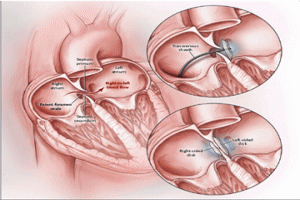
Device Closure is utilized to close a deformity or an opening between the right and left sides of the heart. A heart has 4 chambers. The upper two chambers are known as Atria. Atria are isolated by a divider which is called Atrial Septum. The lower chambers are known as Ventricles-Right and left. Aspiratory Veins supply Oxygenated blood to the Left Atrium. This left chamber, thusly, sends this oxygenated blood to the Left Ventricle through Mitral Valve, for flow of oxygenated blood in the body.
The device closure procedure utilized as a reparative medical procedure is known as trans catheter closure, despite the fact that it is done for a reparable hole and this isn’t the main therapy for hole closures. When contrasted with different medical procedures, it is a less invasive surgery.
DURING THE SURGERY
- Before the medical procedure begins, a patient is managed with IV and intravenous prescriptions are begun. The individual has leads appended to his chest for ECG. The individual’s groin/arm region is cleaned and a plastic thin tube known a catheter will be placed through that area. In the meantime, the patient is given narcotics for relaxing purposes and local sedation, however they will be awake and conscious all through the technique.
- A contrast color would be infused in the veins to find out about the heart chambers and the size of the hole. Whenever required, an echo cardiogram or transoesophageal echo cardiogram is additionally taken.
- After the size of the hole is determined, an extraordinary catheter is managed in the arteries which convey a small metallic mesh like closing device. This device is then fitted in the opening and afterward delivered by the catheter. This catheter is then removed, in the long run, heart tissue creates on the closure device, accordingly making it a part of the heart itself.
POST SURGERY
- At the point when the catheter is eliminated, stitching of the area is done or heavy bandaging, as required. The patient is kept in the hospital for a day or two. The patient can continue their schedule seven days after the specialist’s advice. They are encouraged to keep a healthy lifestyle which incorporates exercising, maintaining a good diet and regular cardiac checkups.